
 Brett Derricott
Your middle managers are the backbone of your organization. They're the ones translating strategy into execution, coaching individual contributors, and holding the day-to-day operations together. Yet somehow, despite their critical importance, they're often left to manage their headcount with little more than PowerPoint and spreadsheets.
It’s not just inefficient. When managers lack access to HR, finance, and recruiting tools, their ability to plan and execute well within their area of responsibility is severely diminished. Time is wasted, decisions are made based on inaccurate data, and frustration mounts as leaders are left to devise their own solutions.
Walk into any organization and you'll hear the same refrain: people are our most important asset. And yet, the people responsible for managing, developing, and retaining those employees often lack the visibility into the information they need to do their jobs well.
The challenge goes deeper than access to information. A Gallup survey found 97% of managers are juggling individual contributor work alongside their leadership responsibilities. They're already stretched thin. And when it comes time to plan changes to their team's structure, submit hiring requests, or understand where vacancies exist, they're forced to work with spreadsheets and static reports that can't keep up with the reality of their part of the organization.
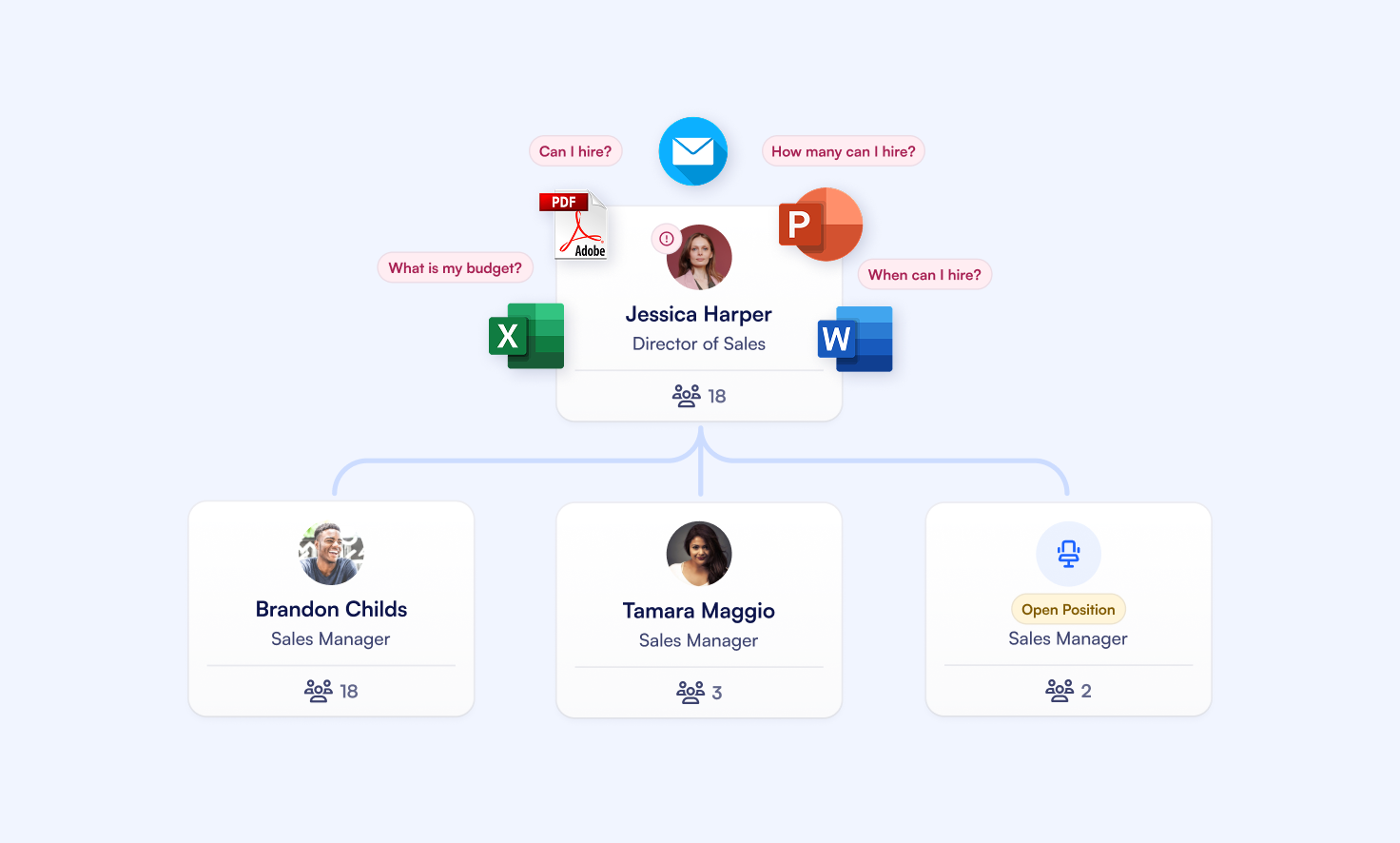
A VP of sales needs to know her team structure. An engineering manager wants to understand where vacancies exist and who reports to them. A department head is thinking about succession planning and internal mobility for their team.
These are basic requirements for effective management. Yet most managers find themselves logging into outdated systems that lack the info they need—if they have access at all—or requesting data from HR and waiting days for a spreadsheet to arrive. By the time it arrives, things have already shifted. Someone got hired, someone was promoted, someone left. The data no longer reflects reality.
When middle managers don't have access to real, current organizational data, the consequences ripple outward.
Strategic decisions suffer. A manager overseeing teams across multiple layers tries to plan headcount for the next quarter, but they're working with incomplete information. They think they have approval to hire five new positions when they actually have three. Or they're planning to post a job when the vacancy has already been filled—they just don't know about it yet. Or worse—they approve hiring for a new position when an existing requisition is already set to fill the need, leading to unnecessary headcount costs that could have been avoided with better visibility. The result? Wasted time and money, misaligned plans, and missed opportunities.
Retention takes a hit. Managers can't identify flight risks if they don't know how long someone has been in their role. They can't have meaningful career conversations with employees about growth opportunities if they can't actually see what those opportunities are. They can't champion their people for internal moves if the process is opaque and cumbersome. And they can't proactively plan for succession if they don't have visibility into what a critical position requires and who's ready to step up when needed.
Ownership erodes. When managers don't have visibility into their own organizational structure, their own headcount, and their own planning—they don't feel ownership. They feel like they're blindly executing someone else's plan rather than building their own. That disengagement has real consequences: Gallup research shows that highly engaged business units achieve 59% less turnover. When managers lack the autonomy to lead their teams, they're among the first to disengage—and leave.
One chief product officer described this exact experience. After submitting detailed hiring plans for his design team, he waited months with no visibility into what had been approved. Six months into the year, he finally had to track down HR to ask, “Did I get any of those approved?” The answer was buried in spreadsheets he'd never seen. He had no connection to the budget, no sense of ownership over his team's growth, and no way to plan ahead. That disconnection between the plan he submitted and the reality of what he could execute made it impossible to feel truly accountable for his team's success.
The best managers need three things:
Transparency: They need to see the complete picture of their sphere of influence—who reports to them, what roles exist, where the vacancies are. Not a static report from last month. Something real-time.
Agency: They need to be able to actually do something with that information. They should be able to submit requisitions and see real-time status of those requisitions, explore changes to their team structure, and plan strategically for their area of responsibility without having to go through intermediaries.
Alignment: They need to see how their piece of the organization connects to the bigger picture. How their planning feeds into company-wide strategy. How their decisions matter. Leaders at every level need to understand the organization’s strategy and goals, and be fully empowered to do their part in executing towards the strategy.
When managers have these things, transformation happens. We've watched a VP of sales realize she could finally access organizational data without waiting for an export. She could pull up the org chart, see her team structure, easily explore scenarios and impacts any time, anywhere, even on a Friday night while watching TV. That level of access was genuinely exciting to her. She wasn't waiting for HR anymore. She was empowered.
Traditionally, workforce planning and organizational structure have been the domain of HR, finance, and senior leadership. A spreadsheet gets created, circulated to a select group, and stored for reference. But the middle managers executing that plan day-to-day frequently operate without access to the underlying data or what's changed since.
A different model is emerging. When managers are directly involved in the headcount planning process, and when leaders at every level use the same system for planning and execution, organizations see meaningful change. There are fewer handoffs, less waiting, more informed decisions, and plans that stay relevant instead of immediately becoming outdated.
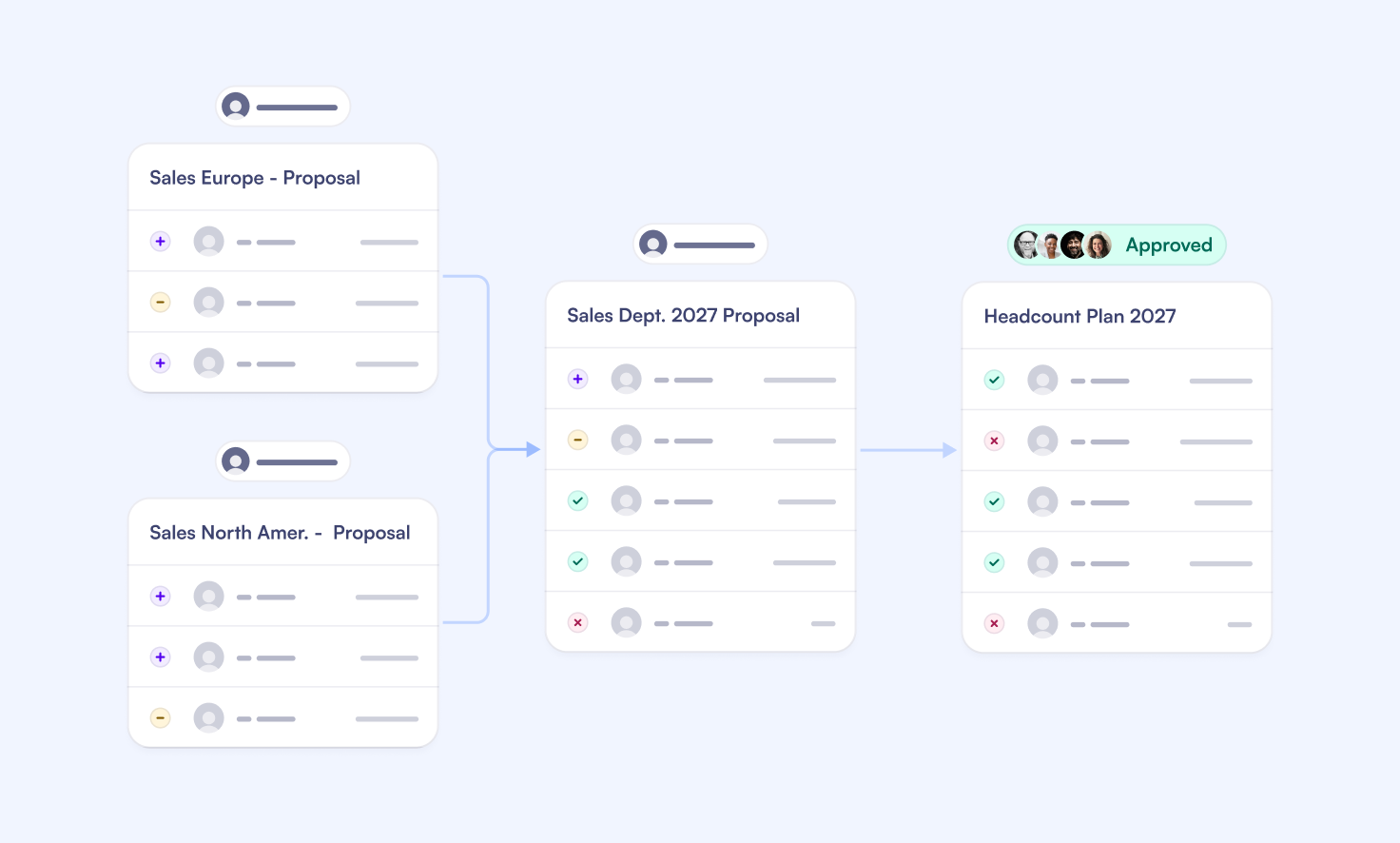
The advantages are clear: decisions happen faster, accuracy improves, managers buy in because they helped shape the plan, and there's genuine continuity. Managers can interact with the plan daily instead of it getting filed away.
There's an opportunity to fundamentally shift how organizations empower middle management.
Strong managers need direct access to information about their teams. They need to be empowered to think strategically about their organization. And they need to operate as leaders with real agency and ownership, not as intermediaries executing someone else's strategy.
The impact of providing managers with effective tools, current data, and genuine autonomy shows up in measurable ways. They become more connected to business outcomes. They take deeper ownership. They stay longer. And they develop their people more effectively because they can see opportunities and plan strategically for growth.
It's worth reflecting on the disconnect: the people most responsible for executing organizational strategy often have the least access to the systems and information they need to do it well.
Ready to rethink how your managers plan and execute? .
Schedule a brief, no-pressure call with a product expert.